Waterproof vs water-resistant cushions: the difference that actually matters
"Waterproof outdoor cushions" is what most people search for. It is not what most people want. Here is what each label means and why.
The four labels
| Label | What it means on fabric | Typical construction |
|---|---|---|
| Waterproof | No water passes through the fabric at all, even under pressure | PVC or PU coating, taped seams. Not breathable |
| Water-resistant | Resists water to a degree; slow seepage under pressure or time | Tight weave, often a light coating |
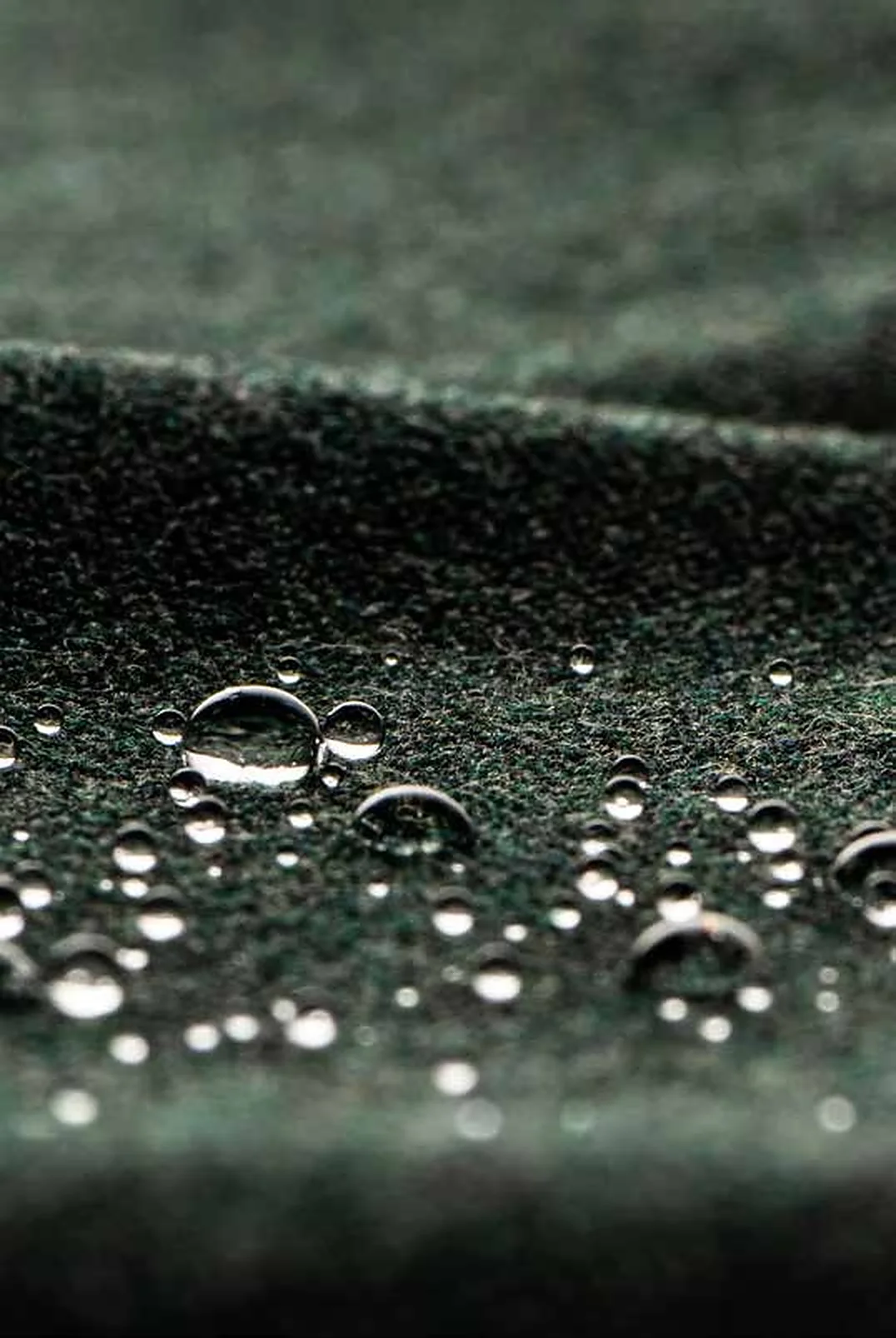
| Water-repellent | Water beads and rolls off; soaks in only under prolonged rain | Fluorine-free finish on acrylic or olefin fibre. Breathable |
| Showerproof | Marketing term for water-resistant at best | Anything |
Why a waterproof cushion is a bad idea
A cushion is not a tent. It is sewn, it has a zip, and someone sits on it while it is wet. Water enters through the needle holes and the zip. With a sealed cover, that water cannot get out again, and a cushion that cannot dry is a cushion that goes mouldy. A waterproof cover also does not breathe, so it feels clammy in sun.
The construction that works outdoors is the opposite: let a little water in, let all of it out. A water-repellent cover sheds most rain. The inner cover is deliberately water-permeable. The filling is hollow fibre that does not absorb. After a downpour the water drains through the bottom seam and air replaces it. That is how our cushions are built, and why we call the site waterproof outdoor cushions while being precise about it on every product page.
Waterproof is for the furniture cover. Water-repellent and quick-draining is for the cushion.
What to look for instead of "waterproof"
- Solution-dyed fibre (acrylic or olefin), so the colour survives sun and bleach. See why solution-dyed acrylic does not fade.
- Water-repellent finish, ideally PFAS-free. Sunbrella® switched its whole range; see Sunbrella is now PFAS-free.
- Draining filling: hollow fibre or reticulated foam, not standard upholstery foam. See filling guide.
- Removable cover with a zip, so you can wash it and replace the inner.
- UV-stable thread, or the seams fail before the fabric.
When you do want waterproof
For a furniture cover that goes over the whole sofa in autumn, yes. For a boat seat that sits in standing water, a closed-cell foam with a welded vinyl cover is the right tool, though it is not comfortable. For cushions you sit on in a garden, a balcony or on a terrace, water-repellent and quick-draining wins every time. Our comparison of the actual fabrics is in Sunbrella vs olefin vs polyester.
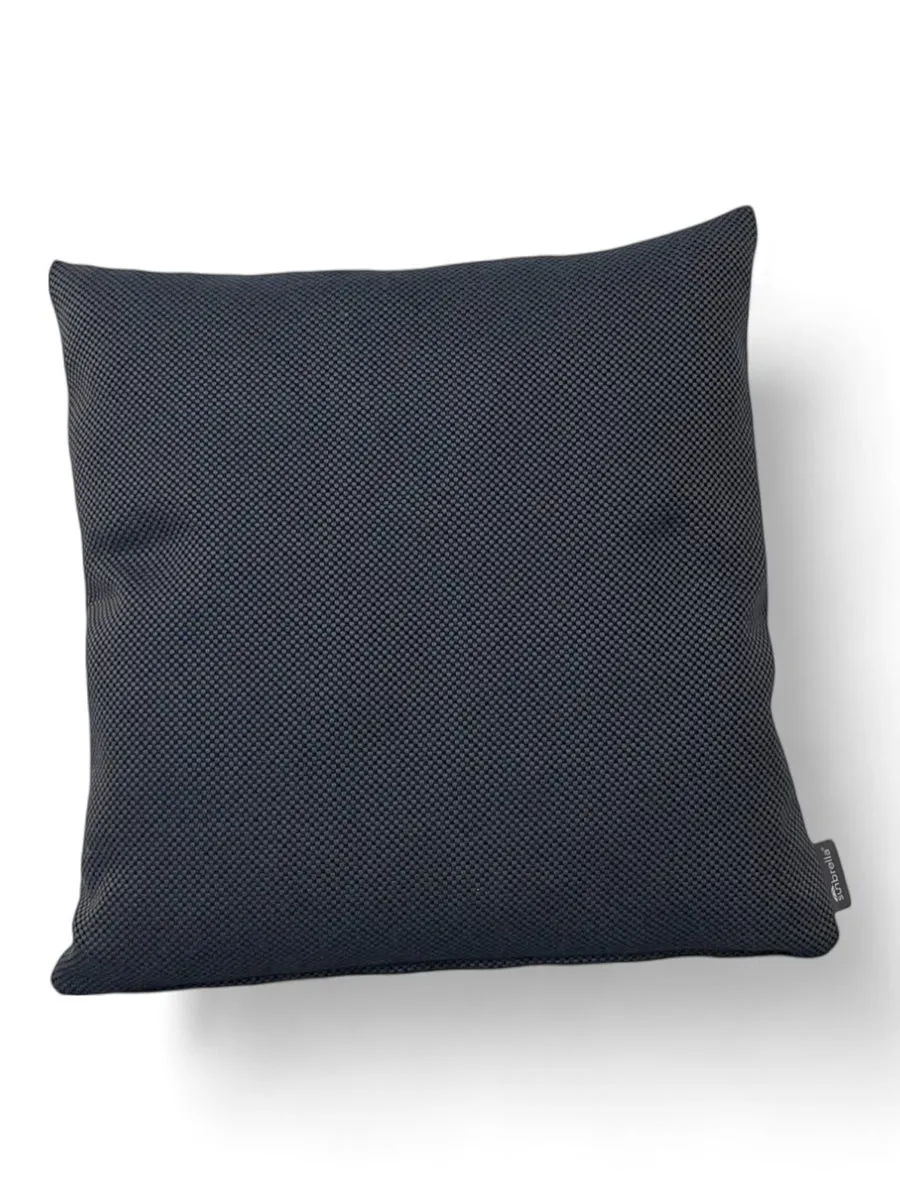
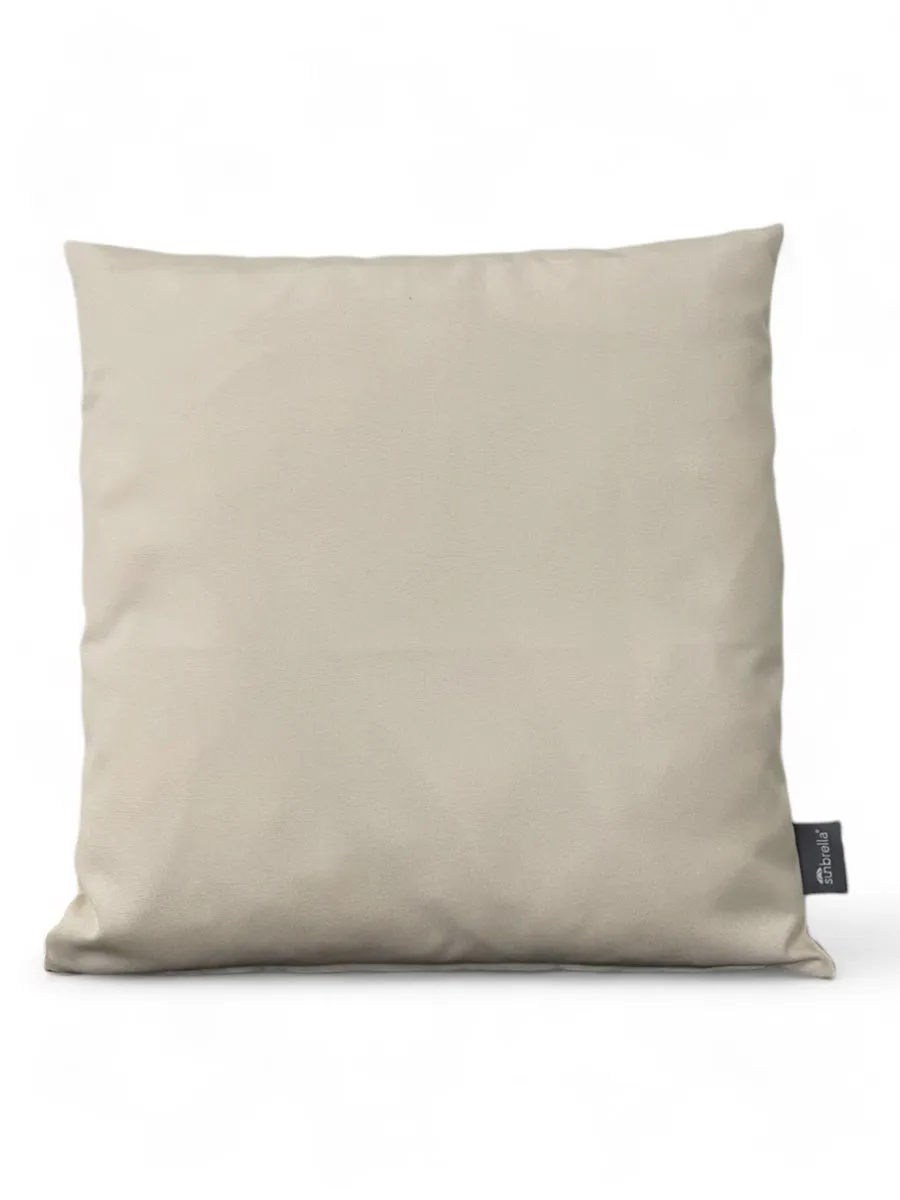
158 Sunbrella® colours in 45×45, filling included, shipped next working day. Browse the collection or ask about made to measure.