Mould on garden cushions: how to remove it and stop it coming back
Mould does not grow on the fabric. It grows on the dirt that sits on the fabric, in a cushion that stays damp. Fix those two things and it stays away.

Why garden cushions go mouldy
Mildew needs three things: moisture, food and still air. A cushion stored damp in a closed box has all three. Pollen, sunscreen, crumbs and tree sap are the food. The cushion that was folded in the shed in October and opened in April is the classic case. Sunbrella® fabric is mildew-resistant because the fibre itself is not food for mould, but dirt on top of it still is.
Step 1: find out which fabric you have
If your cushions are Sunbrella® or another solution-dyed acrylic, you can use bleach. If they are printed polyester, you cannot without losing colour. Check the label or test on the underside first: a drop of 1:9 bleach water, wait ten minutes, rinse. No change in colour means you are safe.
Step 2: remove the mould
- Brush off the dry mould outside, not in the kitchen. Wear a mask if there is a lot of it.
- For bleach-safe fabric: one part household bleach to nine parts water. Spray or sponge it on, leave 15 minutes, scrub lightly with a soft brush, rinse until the water runs clear.
- For printed fabric: white vinegar and water 1:1, or an oxygen bleach (sodium percarbonate) following the pack. Leave 30 minutes, scrub, rinse.
- Rinse the filling too if it smells. Hollow fibre can be squeezed out under the tap; foam needs a long soak and days of drying.
- Dry completely on its side in the sun. UV finishes the job.
Sunbrella®: 1 part bleach, 9 parts water, 15 minutes, rinse. Any other fabric: vinegar or oxygen bleach, test first.
Step 3: stop it coming back
- Never store a damp cushion. Two hours on its side in the wind before it goes in the box.
- Store in a ventilated place. A plastic box without air holes is a greenhouse for mould; see cushion storage boxes.
- Clean before storing, not after. Dirt left on all winter is the food source.
- Choose a filling that does not hold water. Hollow fibre in a water-permeable inner cover drains; cheap foam acts as a sponge.
When the cushion is beyond saving
If the mould has gone through the fabric into foam filling and the smell does not leave after two washes, replace the inner cushion or the whole cushion. A cover with mould spots that will not rinse out on printed polyester is also a sign the colour layer has broken down. For a cushion that will not do this again, read best fabric for outdoor cushions.
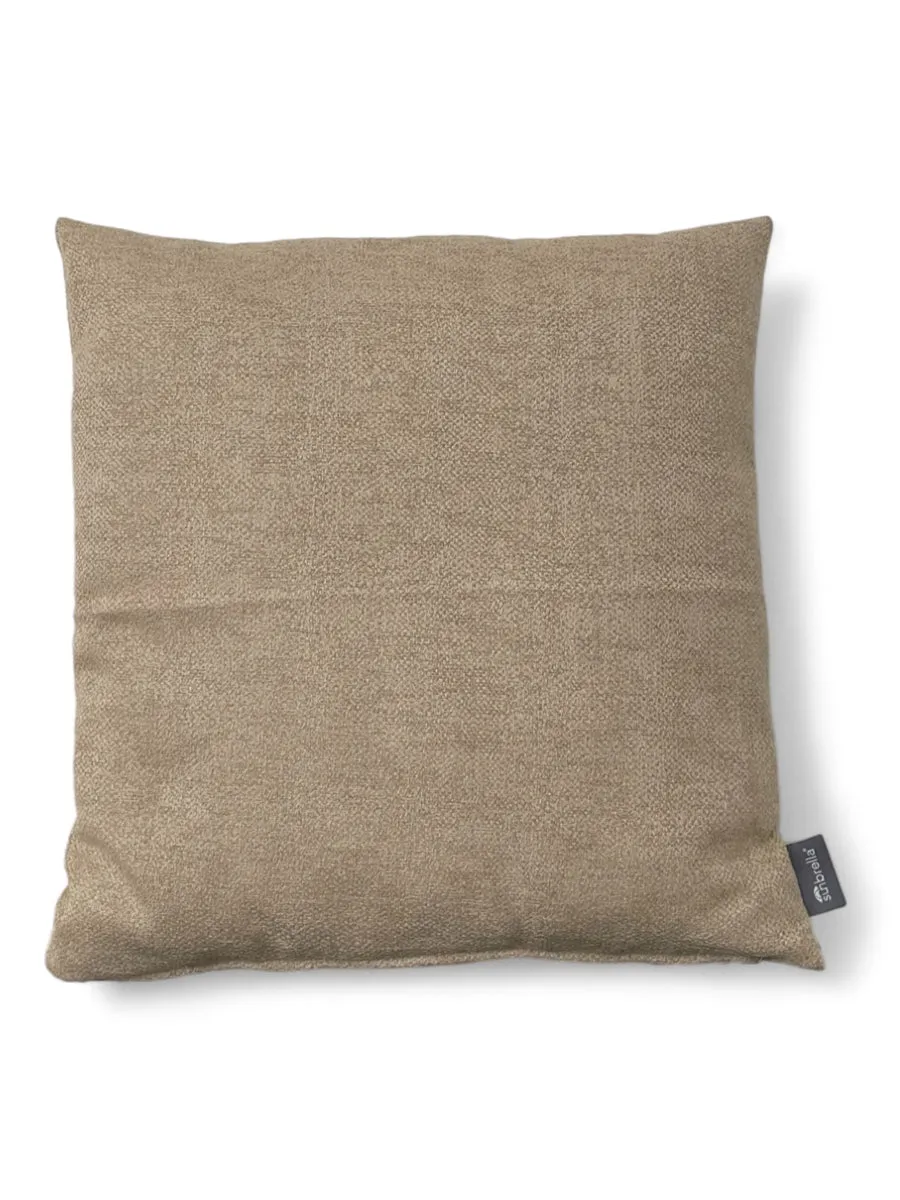
158 Sunbrella® colours in 45×45, filling included, shipped next working day. Browse the collection or ask about made to measure.